

Homeowners checking their septic system riser and realizing it may be time to schedule a pump-out
“How often do I need to pump my septic tank?”
If I had a dollar for every time someone asked me this, I could probably afford a few more vacuum hoses.
Most people have heard the same answer:
Every 3 to 5 years.
Some people nod and move on.
Others pause and wonder if that’s actually true.
And once in a while someone tells me they didn’t even realize septic tanks were supposed to be pumped at all.
So what’s the real answer?
Here’s the honest version from someone who’s spent a lot of time around septic systems in Antigonish and Guysborough County:
The 3–5 year rule isn’t wrong — it’s just not meant to be exact.
It’s a practical, “good-enough-for-most-people” answer, not a precision formula.
Why Everyone Keeps Saying “3–5 Years”
That number didn’t come out of nowhere.
It stuck around because it works reasonably well for most homes, most of the time. It gives homeowners a simple maintenance window without needing a crash course in septic system design.
And let’s be honest — most people don’t want to become septic experts. The system is buried in the yard, out of sight, and not something anyone gets excited about learning. They just want a straightforward answer that helps them avoid problems.
That’s exactly what the 3–5 year guideline does. It keeps people on track without making things complicated.
What I’ve Actually Seen on Real Properties
This is where it stops being textbook advice and starts being real life.
Over the years, I’ve seen a single person fill a tank faster than expected. I’ve also pumped homes with large families where the tank hadn’t been serviced in close to ten years and still wasn’t anywhere near full.
That surprises people — but it makes sense once you’ve been around enough systems.
How fast a tank fills depends on a mix of things: how big the tank is, how many people live in the house, usage habits, whether someone works from home, if there’s a rental unit or business on site, water hardness, medications, diet, soil conditions, system design, and even how well the system was installed in the first place.
Change a few of those factors and the timeline can shift a lot.
So Why Not Just Calculate the “Perfect” Schedule?
In theory, you could analyze every detail and come up with a custom pumping interval for every property.
In reality, most homeowners don’t need — or want — that level of complexity.
Some customers genuinely enjoy understanding how their system works. I’m one of those people myself. If you’re curious and want the deeper explanation, I’m always happy to talk through it.
But many people just want a simple, reliable rule of thumb that protects their investment without turning into a science project.
That’s why the 3–5 year guideline exists. It’s a placeholder answer — a practical default that works well unless there’s a clear reason to adjust it.
When I’m on site and something stands out, that’s when experience kicks in and recommendations can change.
What Matters More Than the Number
Here’s the part I care about most:
Don’t ignore your septic system.
When pump-outs get pushed too far apart, solids can end up where they don’t belong. That’s when drain fields start having trouble, backups happen, and repair bills get uncomfortable.
Regular septic pumping and inspections — even if the timing isn’t perfect — go a long way toward keeping systems healthy and avoiding surprises.
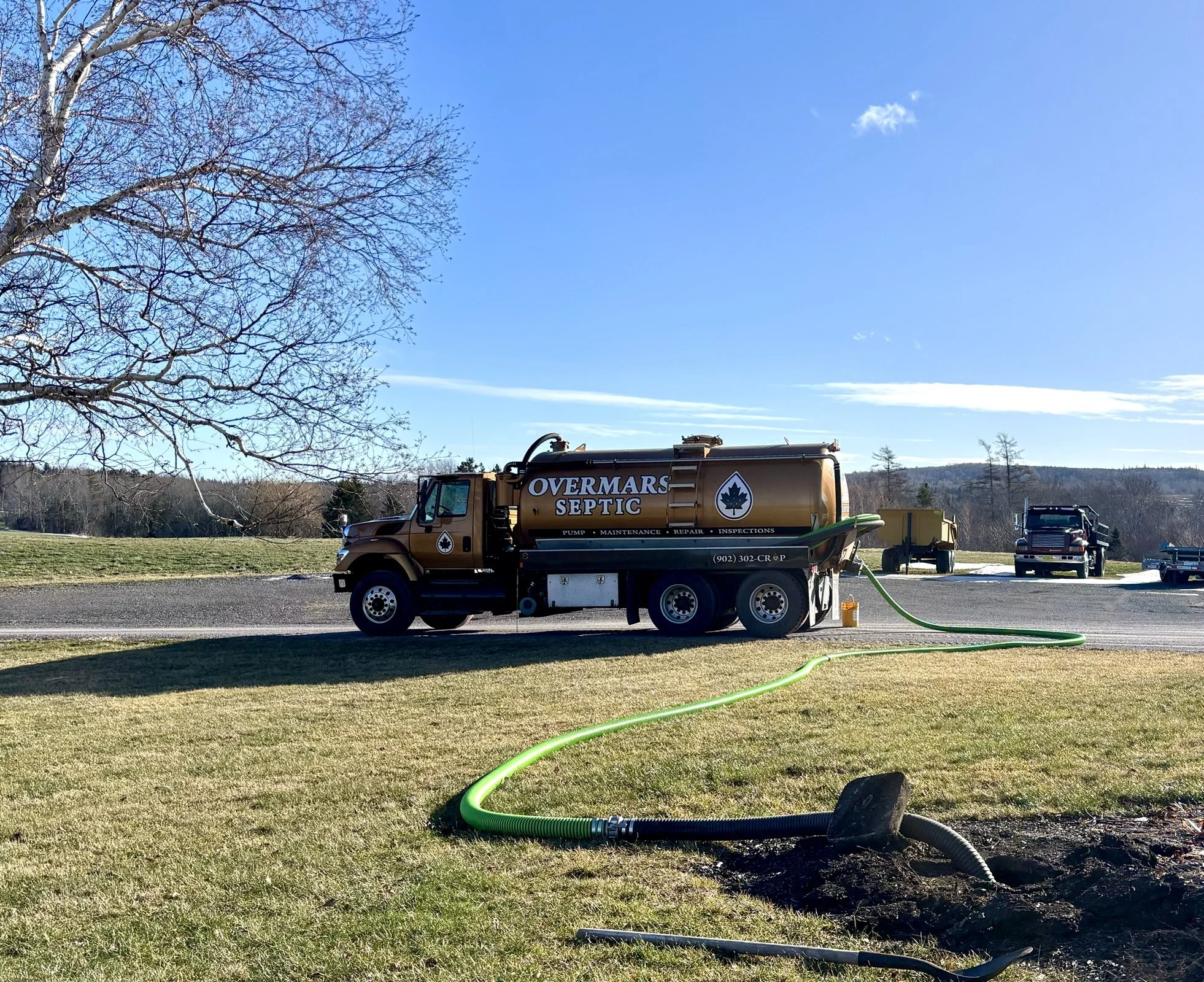
Pumping your septic tank every 3-5 years is a safe maintenance window for MOST homeowners in Antigonish, Guysborough, and surrounding areas
A Quick Personal Note
One of the reasons I started Overmars Septic was because I’ve seen firsthand how much confusion there is around septic systems. I grew up around this industry, spent years working in it, and now I’m bringing that experience back home to serve local homeowners.
My goal isn’t just to pump tanks — it’s to help people actually understand what’s happening under their yard without talking down to them or overselling fear.
If you want the simple answer, I’ll give it to you.
If you want the detailed explanation, I’m happy to provide that too.
The Bottom Line
There isn’t one perfect answer that fits every home.
The 3–5 year guideline sticks around because it’s simple, practical, and works well for most households. It’s not meant to be exact — it’s meant to keep systems running smoothly without overcomplicating things.
If you’re in Antigonish, Guysborough County, or the surrounding area and you’re not sure where your system falls, that’s usually a good place to start the conversation.
And if you’re curious enough to dig into the details — I’m always up for that too.
- Mark