
Other than calls to schedule routine septic maintenance, the most common calls I get are from homeowners dealing with systems that aren’t working the way they should.
Sometimes it’s a complete blockage. Other times things are just slowing down — sinks draining slower, toilets not flushing quite right.
Either way, it’s stressful — and often messy.
This is something I deal with on a regular basis out in the field, so I figured it was worth breaking down the most common causes I actually see — and more importantly, how to prevent them. In many cases, these problems don’t happen overnight. They build up over time and are very avoidable.
First — Is It a Toilet Clog or a Septic Problem?
This is one of the first things I help people figure out when they call.
If only one toilet isn’t flushing properly — and everything else in the house is working fine — you’re almost always dealing with a standard plumbing clog. That’s usually a quick fix.
But when multiple fixtures start acting up at the same time, that’s when I start thinking sewer line or septic system.
When I get a call where “everything is kind of slow”, more often than not, we’re dealing with a partial blockage in the sewer line heading to the tank.
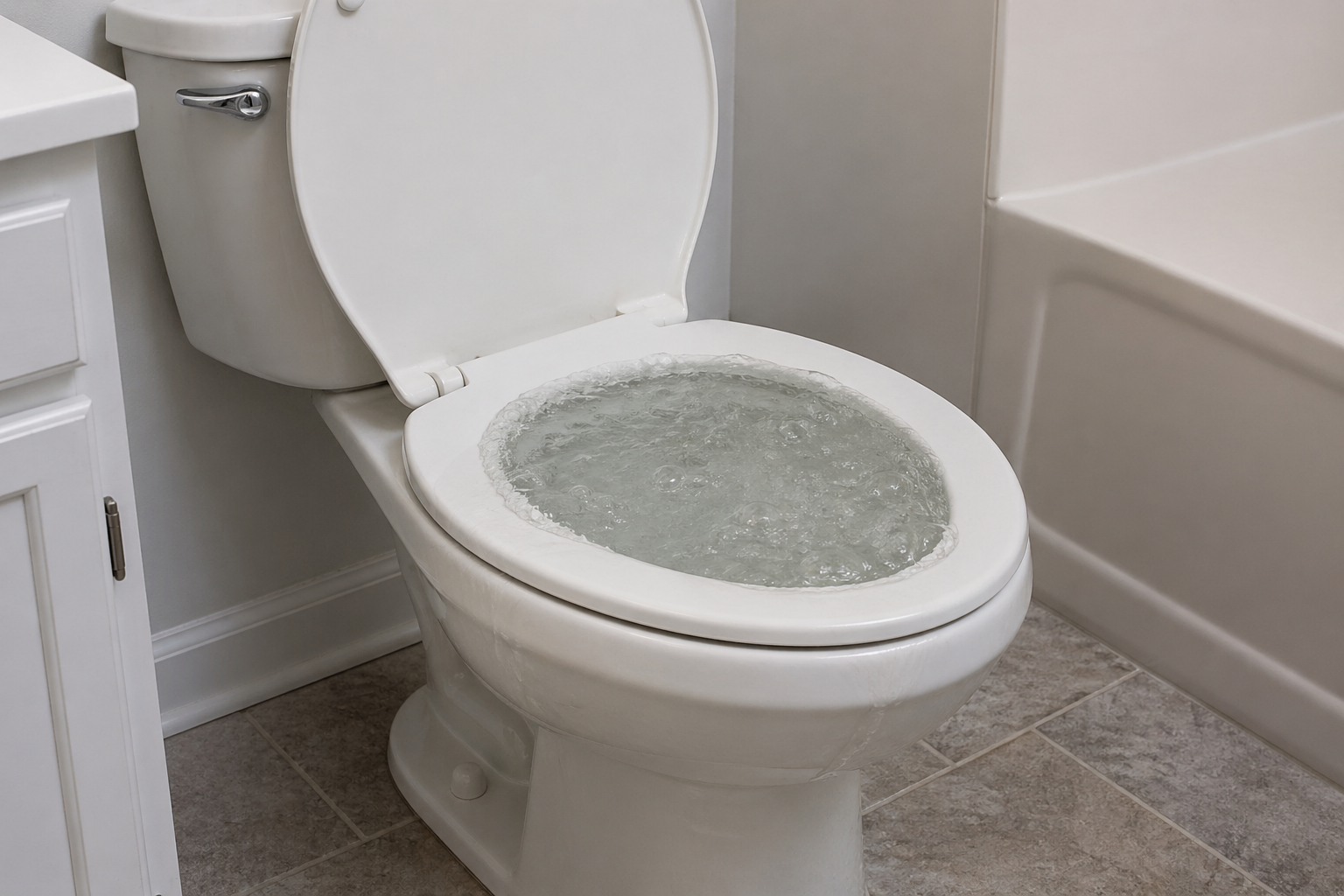
If it’s just one fixture, it’s usually a simple clog — not a septic issue
Another Clear Sign It’s Sewer-Related
These are the calls that usually come with a bit more urgency.
One of the clearest signs I look for is when the lowest fixtures in the home start backing up.
Common things homeowners tell me:
“The washing machine pipe is overflowing in the basement”
“The tub downstairs fills up when we flush the toilet”
“The floor drain is backing up when we run water”
When I hear that, it almost always points to a blockage somewhere between the house and the septic tank.
At that point, the system isn’t draining — it’s pressurizing — and it’s going to push wastewater to the lowest point it can find.
When that starts happening, the best thing you can do is stop using water immediately. Continuing to run water usually just makes a small issue turn into a much bigger mess.
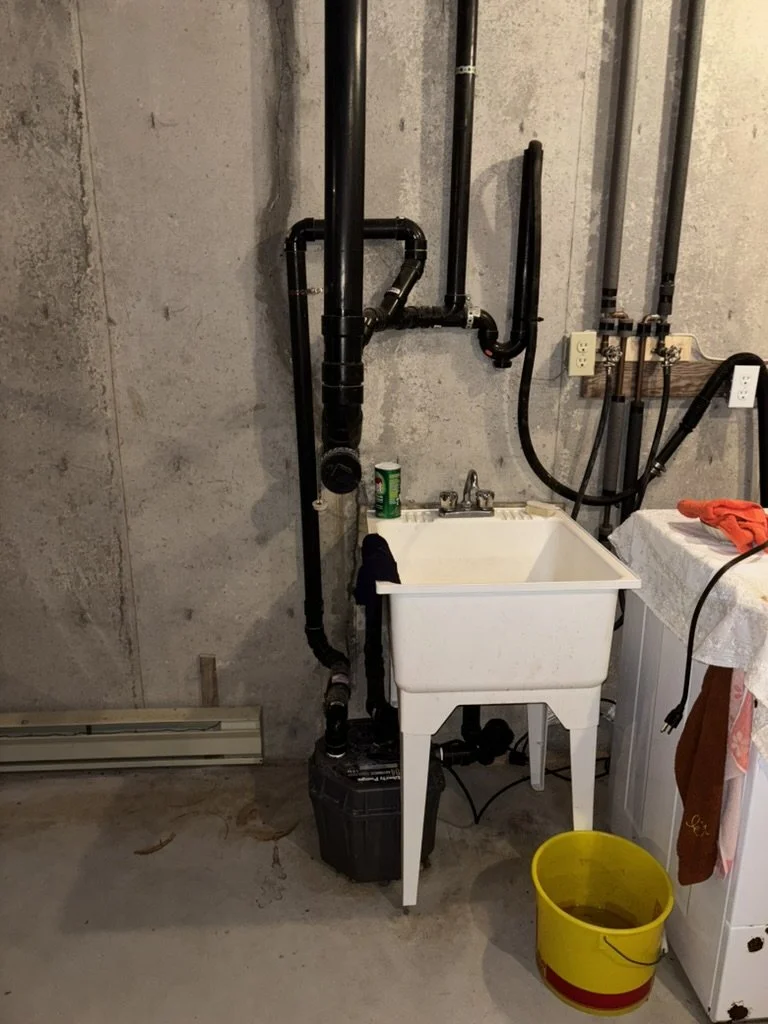
Backups almost always show up at the lowest fixture first.
The Inlet Sewer Line — Where Most Blockages Occur
This is where I see the majority of problems.
The inlet sewer line runs underground from the house to the septic tank, and it needs a consistent slope to work properly.
More often than people realize, that slope isn’t quite right.
I regularly come across:
Lines that are too steep (liquids outrun solids)
Lines that have settled over time and created low spots
Older installs where the grade just wasn’t quite right to begin with
Once material starts sitting in that line, it doesn’t take long before it begins to build up and restrict flow.
A lot of the time, by the time I get there, it’s not just a blockage — it’s been building up in that same spot for years.
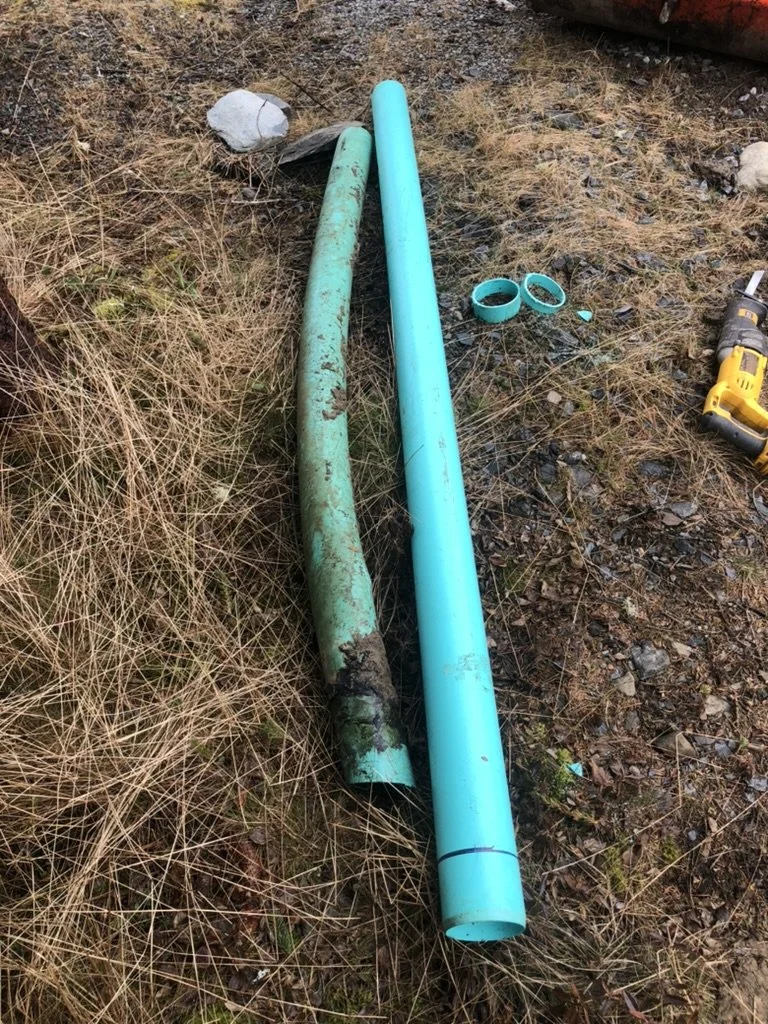
Low spots in sewer lines are one of the most common causes of repeat blockages.
Pipe Condition and Layout Also Play a Role
Even when the slope is correct, the condition and layout of the pipe itself can still cause problems.
The longer and more complex the sewer line, the greater the chance of issues.
Problem areas I see regularly include:
Multiple joints or connections
Cracks or root intrusion
Changes in elevation
In this area especially, there are still a lot of older homes with cast-iron sewer lines.
Over time, these pipes corrode internally. Instead of a smooth surface, they become rough — which gives waste something to catch on.
Once that starts, buildup happens faster and faster.
Upgrading those lines isn’t always urgent, but it can prevent a lot of headaches down the road.
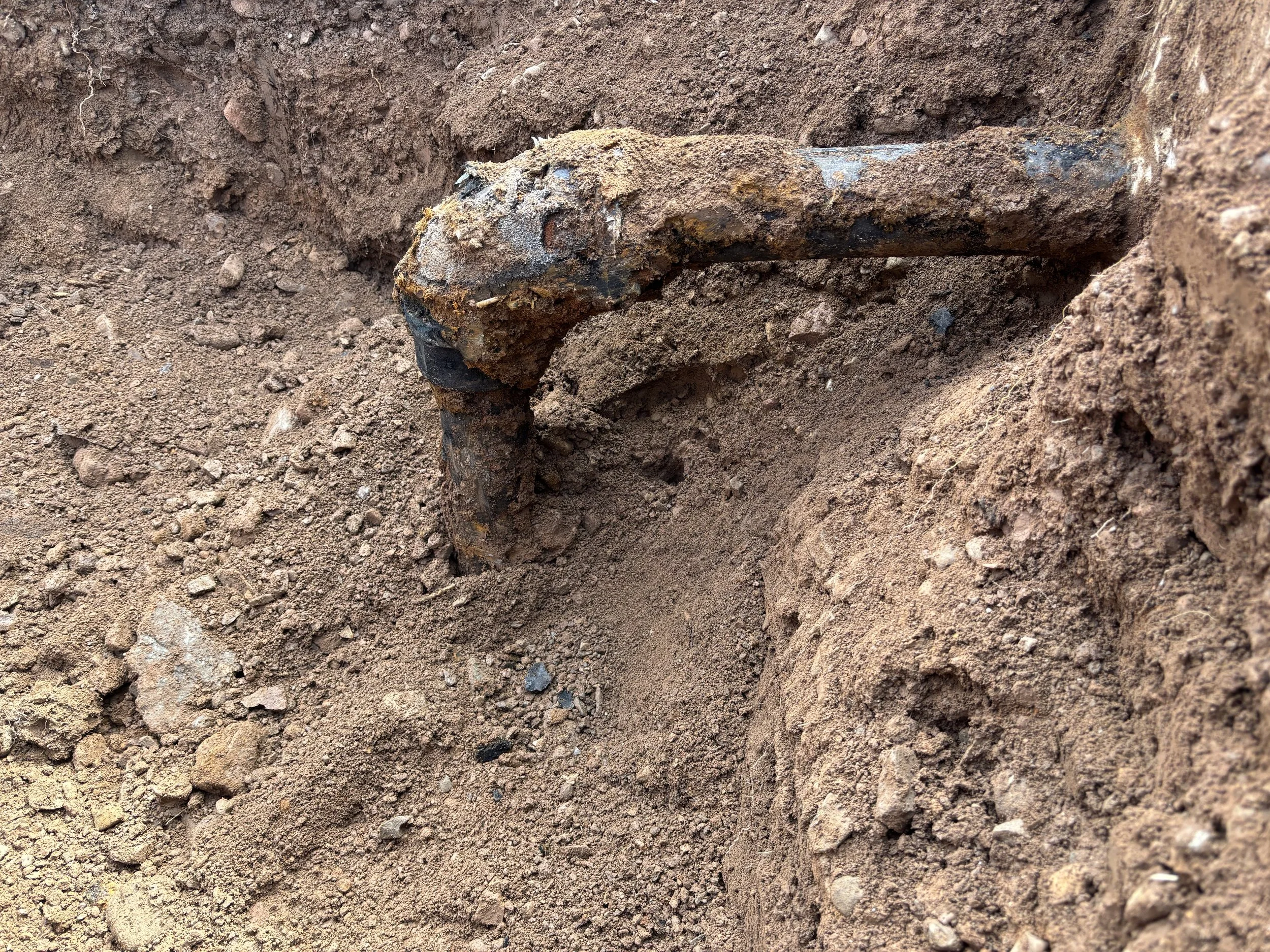
Older cast-iron pipes create rough surfaces where buildup starts easily.
The Biggest Culprit: What Gets Flushed
More than anything else, most sewer blockages are caused by what goes down the drain.
I know people don’t always like to hear that because it can feel like self-blame — but it’s simply the reality.
The three biggest troublemakers are:
Fats and Grease
Grease usually goes down the drain in liquid form when it’s hot.
But once it hits the cooler underground pipe, it solidifies and sticks to the walls.
I’ve opened up lines where the inside of the pipe is coated in grease buildup.
It starts off thin, but over time it builds layer by layer until there’s barely any room left for wastewater to pass.
Toilet Paper
Years ago, toilet paper broke down much more easily in water. Today’s products are designed for comfort and strength, which means they don’t dissolve nearly as well.
Large amounts of paper can accumulate, particularly near the tank inlet, and contribute heavily to the scum layer inside the septic tank.
In many systems today, I find feet of floating paper buildup, which prevents the system from operating as designed.
“Flushable” Wipes
Despite the label, these wipes do not break down in septic systems.
I see them cause major blockages all the time.
They stay intact, catch on rough surfaces, and once they start to accumulate, it doesn’t take long before there’s a serious issue.
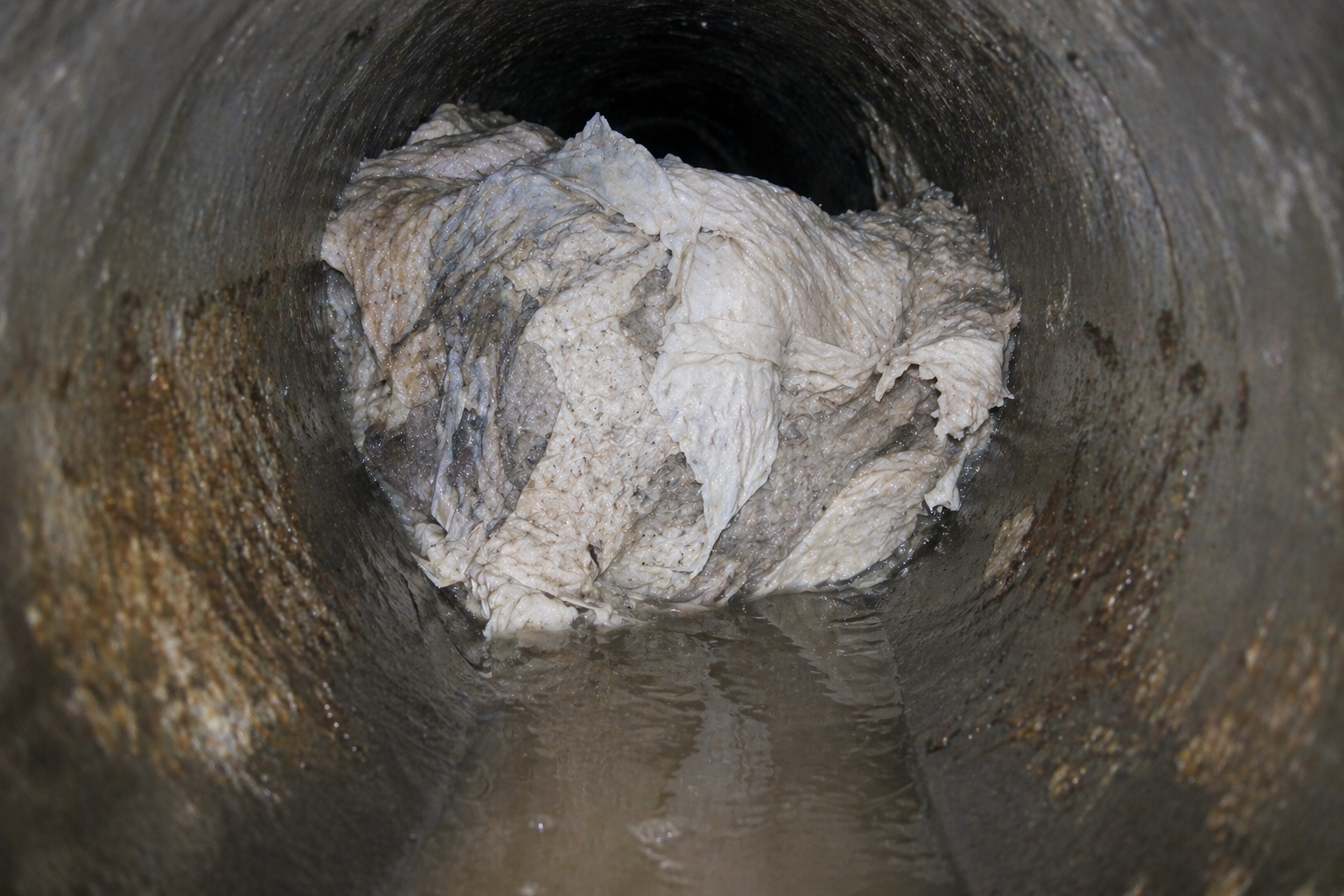
Excess paper and “flushable” wipes can interfere with how a system functions
How to Prevent Septic Backups
The good news is that most of this is preventable.
Simple habits go a long way:
Pump your septic tank regularly based on usage
Never pour grease down drains
Avoid flushing wipes or heavy paper products
Be mindful of water usage
Address slow drainage early
A lot of the emergency calls I go on could have been avoided if the early signs were addressed sooner.
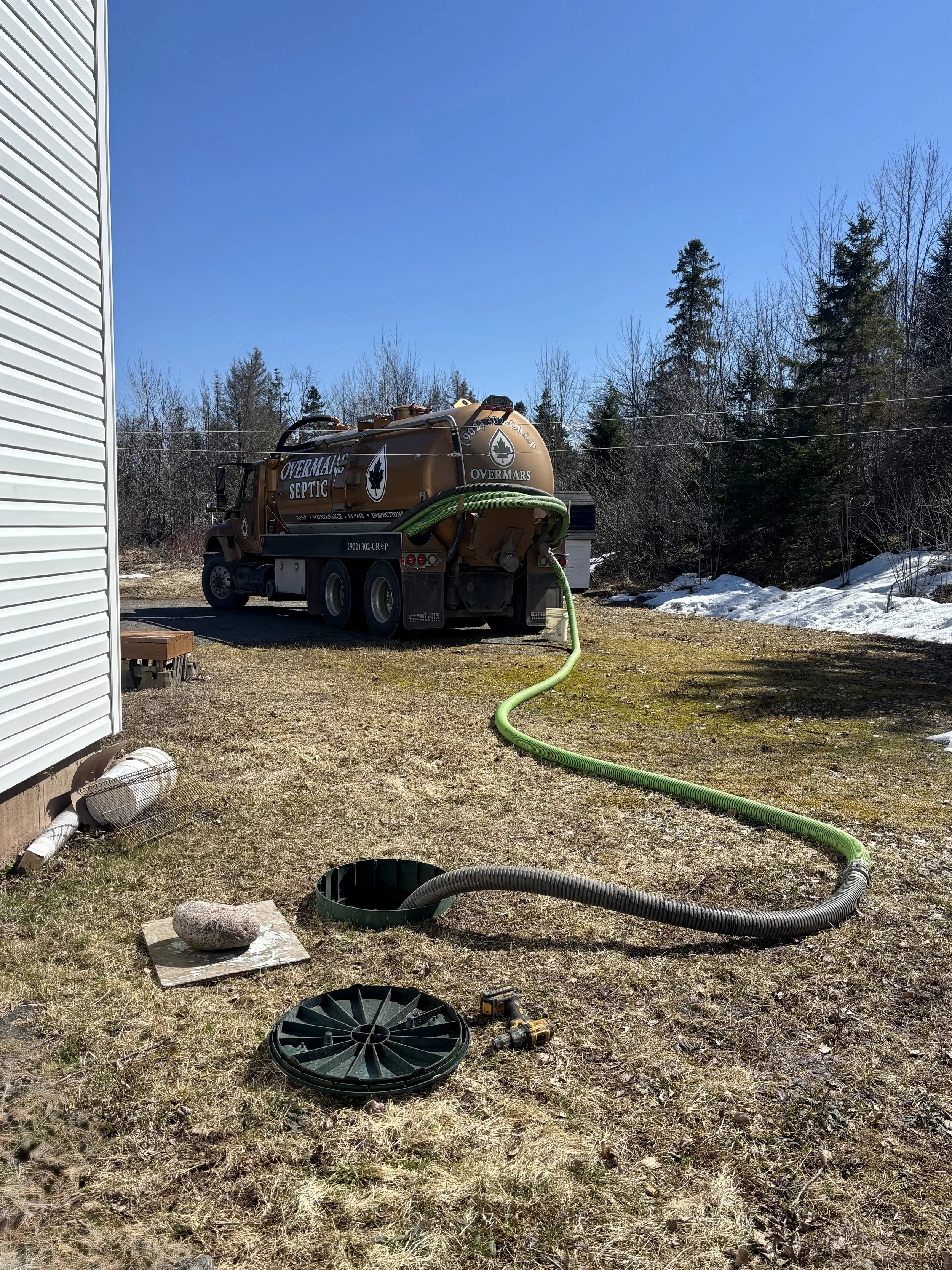
Routine pumping also gives me a chance to inspect the system and keep track of things like scum levels and overall condition — so homeowners know exactly where they stand.
Final Thoughts
Septic backups never happen at a convenient time — it’s usually evenings, weekends, or right when you have people over.
And while I’m always happy to help when those calls come in, the reality is most of these situations are preventable.
A bit of awareness, routine maintenance, and acting early when something doesn’t feel right can save a lot of stress — and go a long way toward keeping your system running the way it should.
-Mark