
Frequently Asked Questions
Q: How often should I pump my septic tank in Nova Scotia?
A: Septic tanks in Nova Scotia should be pumped every 3 to 5 years, depending on household size, water usage, and system age. Larger families and older systems may require more frequent service to prevent backups and costly repairs.
Q: What are the signs my septic system needs pumping or repair?
A: Common warning signs include slow drains, gurgling toilets, sewage odours, soggy or wet ground around the tank, or your septic alarm activating. If you notice any of these issues, contact Overmars Septic right away to prevent damage or a system failure.
Q: Do you provide emergency septic service?
A: Yes. Overmars Septic offers emergency and after-hours septic pumping for urgent issues such as backups, overflows, or system alarms. Additional fees apply for weekend or late-night calls. Call 902-302-2727 for immediate assistance.
Q: What areas do you serve?
A: We proudly serve Antigonish, Guysborough, Richmond, and Inverness Counties, along with surrounding rural areas across Eastern Nova Scotia.
Q: What’s included in a standard septic pumping service?
A: Our septic pumping service includes full tank emptying, lid locating and removal, lid resealing, a visual inspection of the tank, and a review of your system’s performance. We’re happy to answer any questions and offer tips to help protect your system.
Q: Do you inspect septic systems for home buyers or sellers?
A: Yes — we provide real estate septic inspections, including a full video inspection of the tank and inlet/outlet, plus a detailed written report outlining condition, function, and any recommended maintenance or repairs. Ideal for buyers, sellers, and refinancing.
Q: How can I book a service with Overmars Septic?
A: You can book by calling 902-302-2727, emailing mark@overmarsseptic.ca, or submitting a request through the contact form on our website.
Q: Can you help if my septic alarm goes off?
A: Absolutely. A septic alarm usually means the tank is full, a pump has failed, or the system isn’t draining properly. Contact us immediately to prevent overflow or property damage.
Q: Do you work with commercial, rental, or seasonal properties?
A: Yes — we serve rental homes, commercial buildings, camps, cottages, and construction sites. We also offer customized service plans for property managers and businesses.
Q: Why choose Overmars Septic?
A: With over 30 years of combined septic experience, local roots, and a reputation for reliable, respectful, and professional service, we’re trusted throughout Eastern Nova Scotia for septic pumping, inspections, and maintenance.
How does my Septic Tank work?
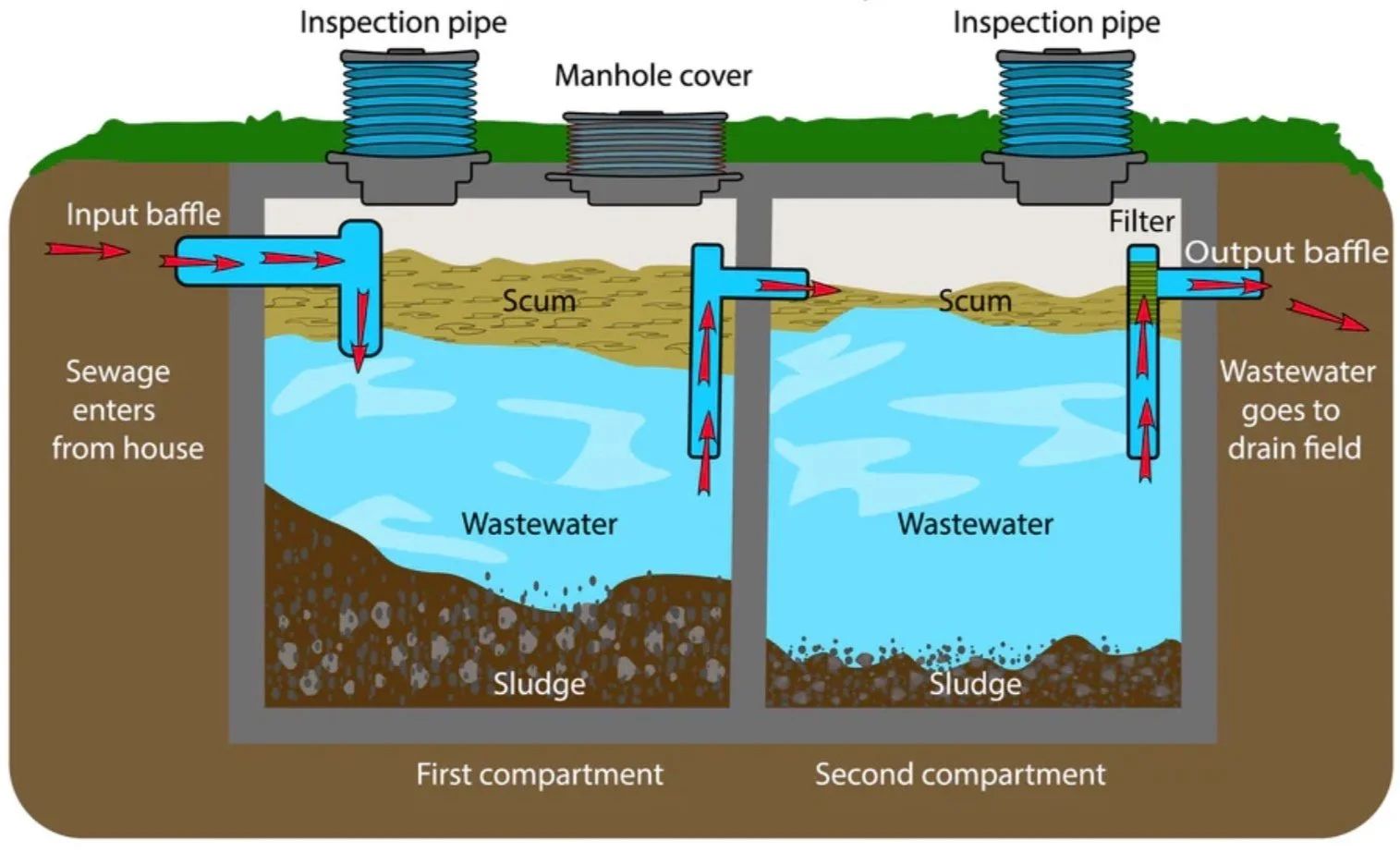
A septic tank is designed to separate and hold solid waste while allowing liquid wastewater — called effluent — to flow safely to a drainfield for further treatment.
When sewage enters the tank, it naturally separates into three layers:
• Sludge sinks to the bottom. This is the heavy, solid waste.
• Scum floats to the top. It contains fats, oils, food particles, and other debris.
• Effluent is the liquid layer in the middle — this is what eventually flows out to the drainfield.
Over time, the sludge and scum layers build up. If the tank isn’t pumped regularly, these layers reduce the space available for effluent. When they get too thick, solid material can escape into the drainfield, leading to clogs, system failure, and costly repairs.
Routine pumping removes the sludge and scum before they become a problem — protecting your system, your property, and your wallet.